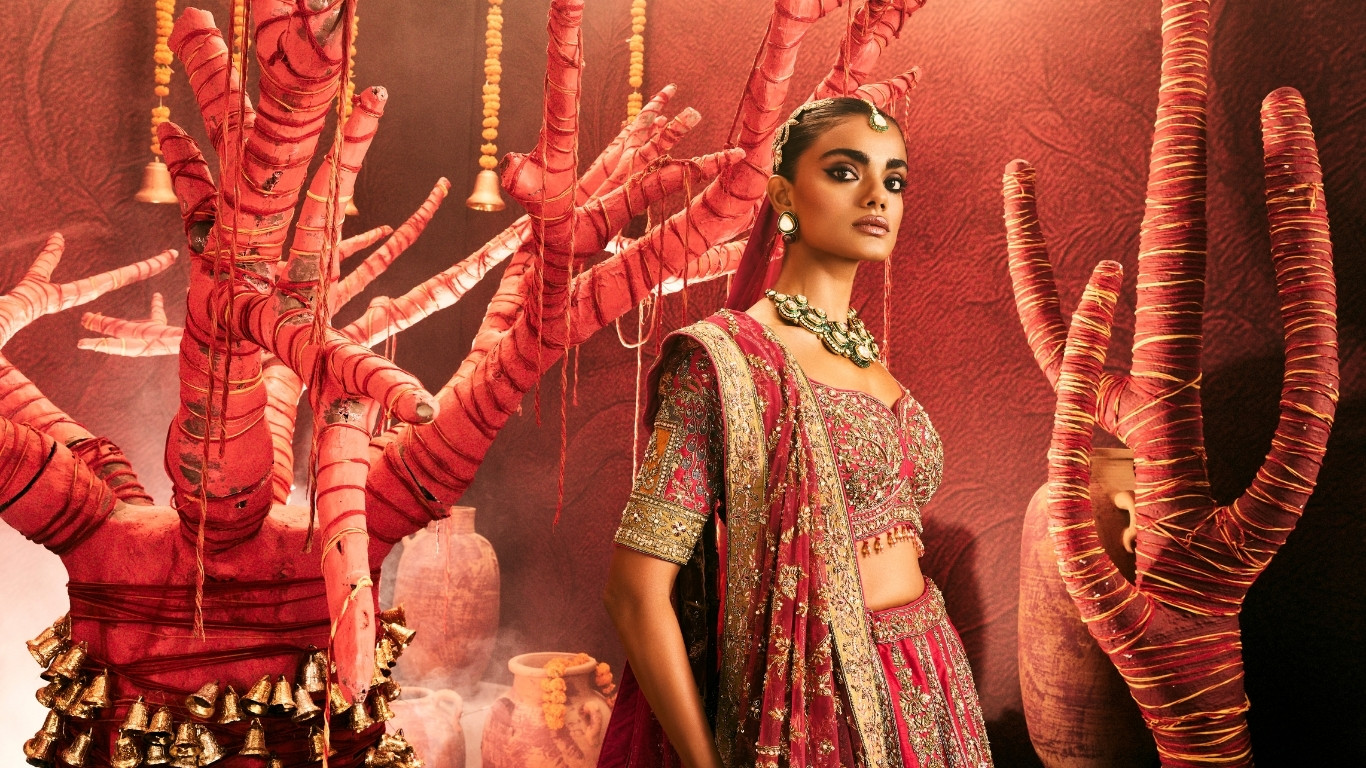
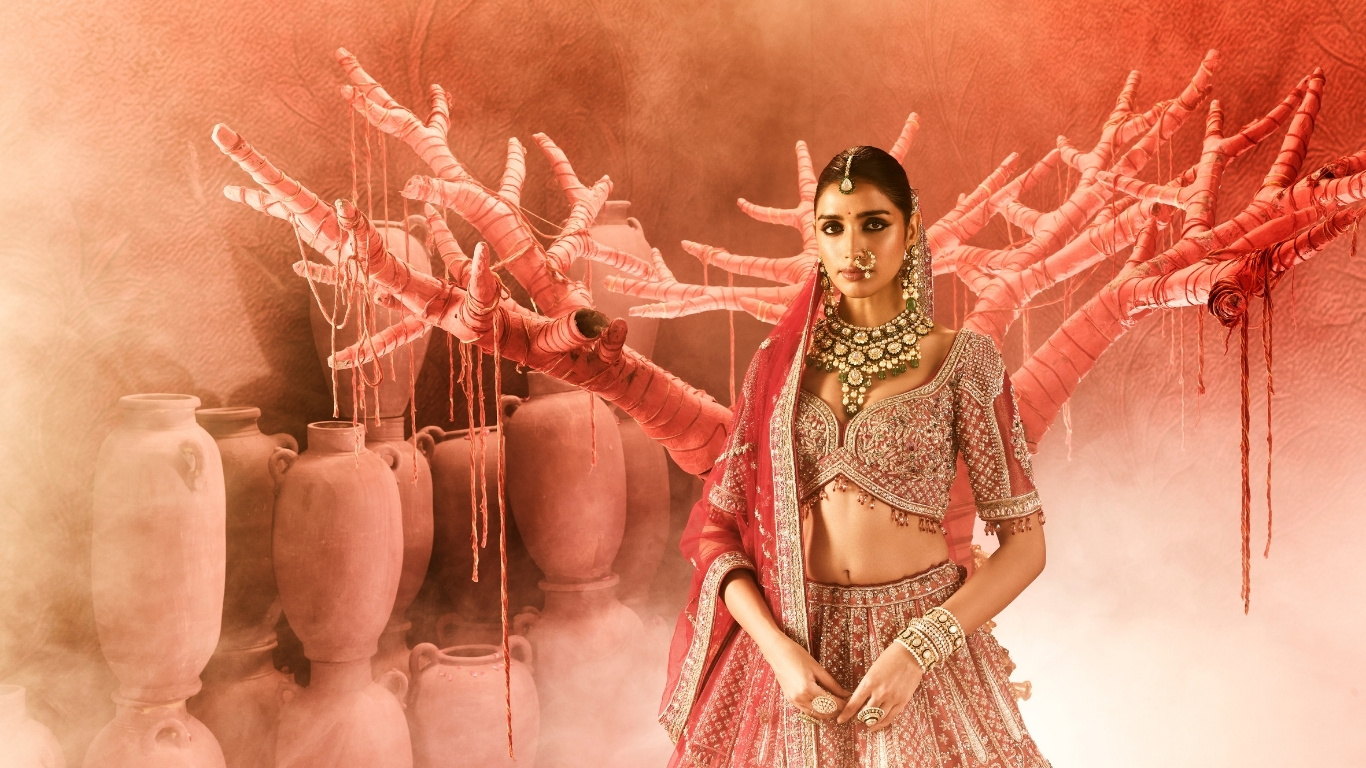
She walks into the atelier with a folder of references and leaves having set them all aside. This happens more often than you might think. Because somewhere between the first cup of tea and the first drape of fabric across her shoulder, the Antara bride realises she is not here to copy a look — she is here to author one.
We design for the woman who values heritage but writes her own rules. She may pair her grandmother’s polki with a silhouette no one in her family has worn before. She may ask for sindoor red, or she may ask for ivory, and both requests are met with the same reverence.
No two Raagwaas brides ever wear the same story.
The consultation is the couture
Every Antara journey begins with a conversation, not a catalogue. Our stylists ask about the venue, the hour of the ceremony, the songs that will play, the colours her mother wore. These details are not small talk — they are design briefs. A lehenga for a sundown pheras in a haveli courtyard asks for different embroidery than one for a midnight reception under chandeliers.
Then the artisans take over. Months of zardozi, resham, and dabka follow — each motif placed for her body, her light, her day. When she returns for the final fitting, what she puts on is not a garment from a collection. It is a chapter of her own story, told in thread.
If you are ready to begin weaving yours, our ateliers are ready to listen.